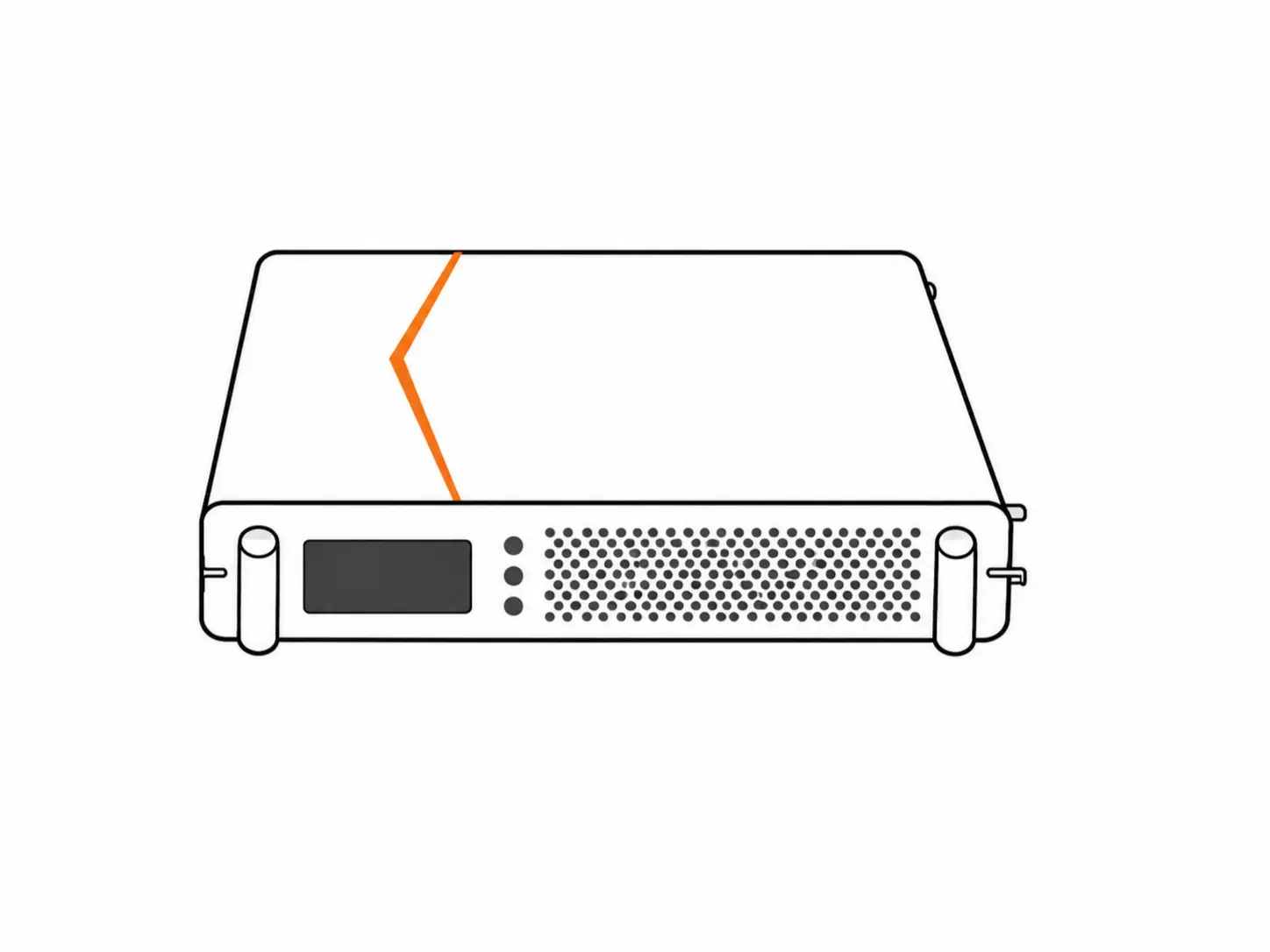
A water treatment plant is a continuously running, load-varying process. Pumps, blowers, mixers, compressors, dosing systems, and control panels must run without interruption — electrical reliability is process reliability. Modern plants add VFDs, UPS, soft starters, and automation for efficiency, but those same devices inject harmonics, drop PF, and cause voltage fluctuation. This article covers how low-voltage (≤ ~1 kV) AHF and SVG address it.
Why the Load Profile Is Hard
Plant load is not fixed. Pump speed follows demand; blower load tracks the treatment process; motors start and stop; some equipment runs for long continuous hours. That swing stresses the electrical system:
- Harmonic distortion from VFD-controlled pumps and blowers
- Poor PF from motor loads
- Voltage fluctuation during load changes
- Transformer and cable heating
- Nuisance breaker trips
- Reduced motor efficiency and stress on capacitor banks
- Unstable control-system performance
If pumps or blowers trip, the treatment process is directly affected.
Harmonics from VFD-Controlled Pumps and Blowers
VFDs are nonlinear loads. A 6-pulse front end draws pulsed current, producing characteristic harmonics at n = 6k ± 1 (5th, 7th, 11th, 13th…). Uncorrected, THDi commonly reaches 8–30%, above the IEEE 519 low-voltage limit of < 5% (single harmonic < 3%). The distortion spreads through transformers, cables, switchgear, protection, and control panels — the plant keeps running but hotter and less efficiently.
An AHF measures load current with a CT and injects the opposite-phase harmonic component:
ic* = iL − is(fundamental)
It reduces THDi in real time, lowers transformer heating, protects cables and switchgear, and cuts nuisance tripping. Unlike a fixed passive filter, it tracks the day’s changing harmonic current.
Power Factor and the SVG
Large pumps, blowers, and motors draw reactive power. Uncontrolled, PF drops; the plant draws more current for the same real load (at 0.8 vs. 0.95 PF, ∼19% more current, I = P / (√3 · V · PF)), raising I²R loss and risking utility penalties.
A low-voltage SVG provides dynamic reactive compensation, holding PF near 0.99+ and supporting voltage during motor load changes. It responds in < 1 ms versus > 20 ms for a switched capacitor bank, so it keeps up with pump and blower swings without over/under-compensating.
AHF + SVG Together
Many plants face both harmonics and poor PF. Using only one leaves the other unsolved. An AHF cleans harmonics; an SVG corrects PF and stabilizes voltage. Together they cover the full LV bus — useful when a plant has many VFD pumps, large blower systems, high THDi, transformer overheating, capacitor-bank failures, unstable voltage, or repeated trips, and especially when expansion is planned.
The Converter Core: IGBT and SiC
Both devices are bounded by their power switch. A standard IGBT is rated to ~150 °C junction temperature, switching typically below 20 kHz; loss rises with frequency and caps tracking speed.
A SiC MOSFET lifts that: silicon carbide is a wide-bandgap material (3.26 eV vs. silicon’s 1.12 eV), tolerates ~200 °C, switches at 2–3× the IGBT frequency, and cuts switching loss by ~50% — gaining +1–3% efficiency and tighter control. CHITEK low-voltage AHF/SVG platforms are built on this IGBT→SiC migration path, suited to the continuous-duty, swingy load of a treatment plant.
Where to Install and What to Measure
Common locations: main LV distribution panel, motor control center, VFD cabinet, pump control room, blower control panel, transformer secondary, main incomer. The correct point follows measurement, not guesswork.
Engineers should check before selection:
- System voltage and transformer capacity
- Number of VFDs; pump/blower motor ratings
- Measured THDi and dominant harmonic orders
- PF trend and load variation
- Existing capacitor banks; cable/transformer temperature
- Target compensation level
Size to the measurement, not just total motor power, to avoid under/over-sizing or wrong placement.
Conclusion
Water treatment plants run VFD pumps, blowers, and motors that improve efficiency but also create harmonics, poor PF, and voltage fluctuation. Low-voltage AHF + SVG — on an IGBT→SiC core — mitigates both, protecting the electrical system and keeping the process running.
CHITEK Technical Team
5 min read