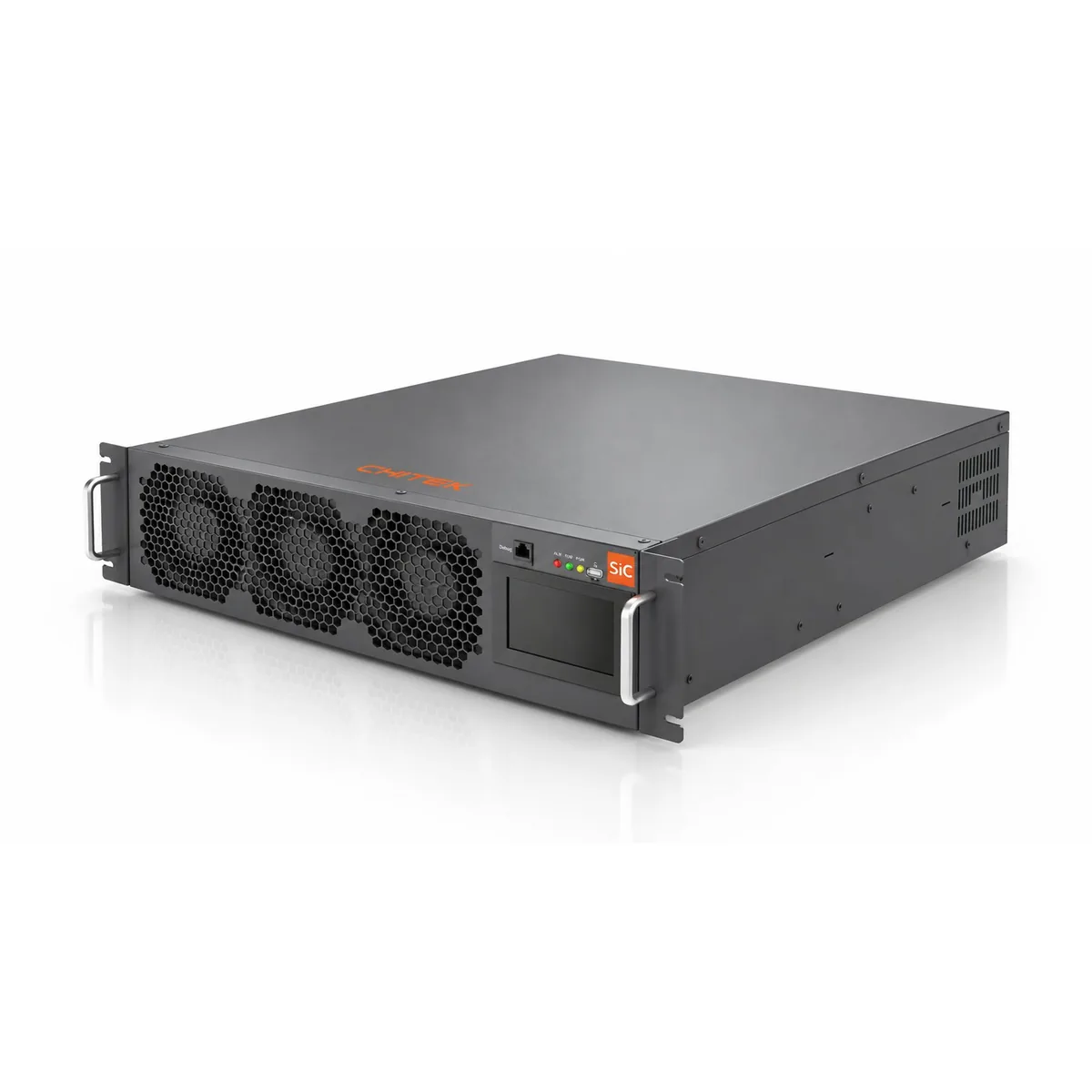
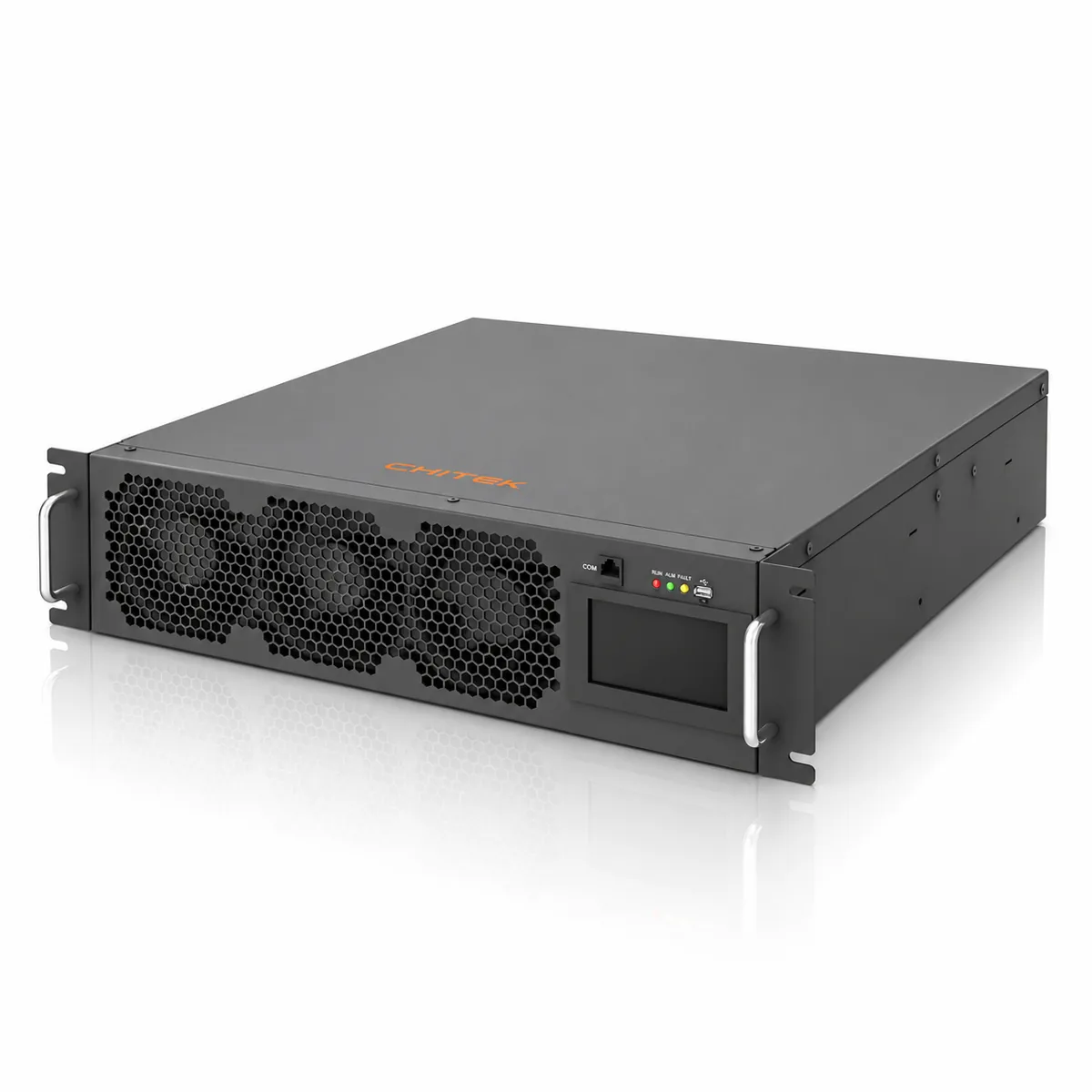
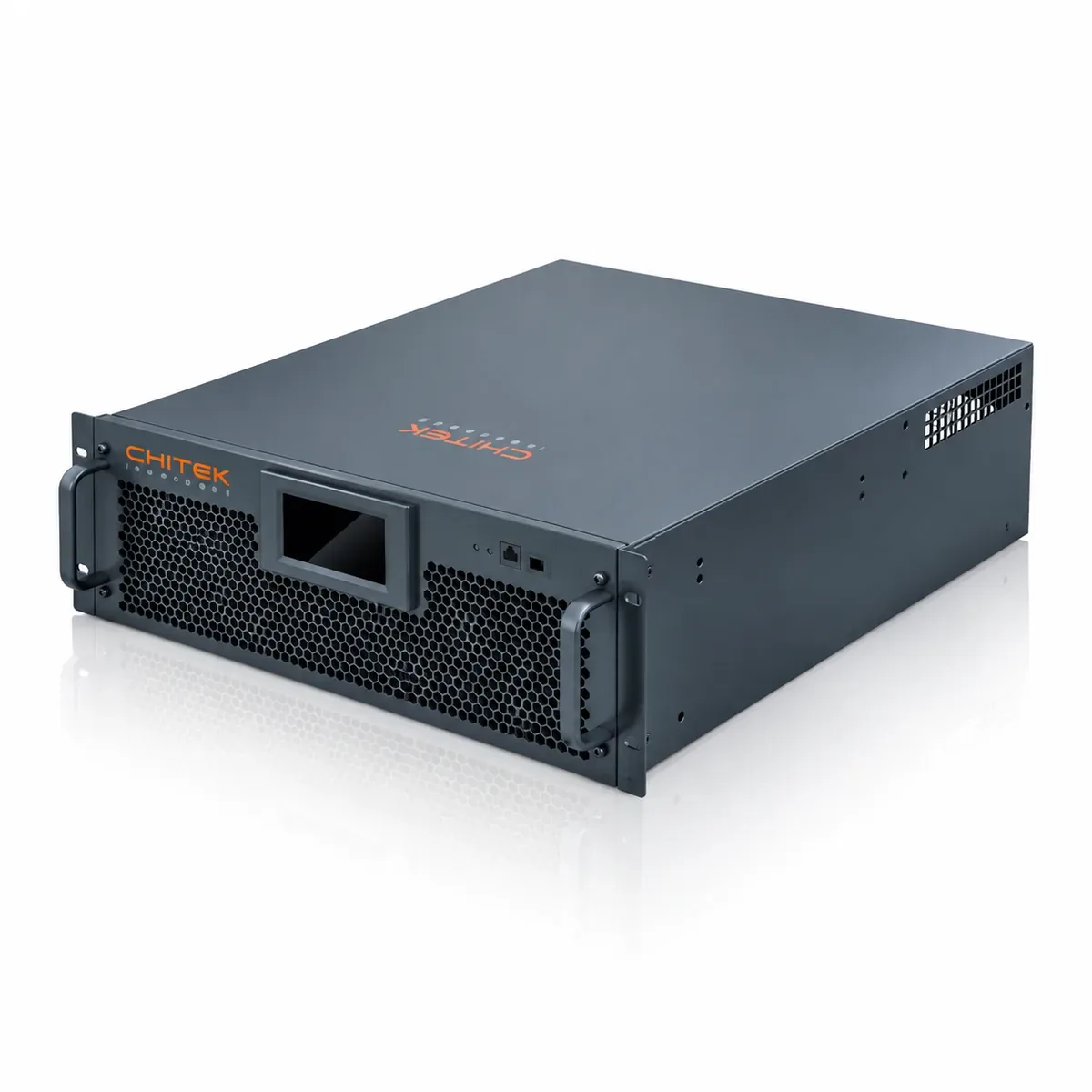
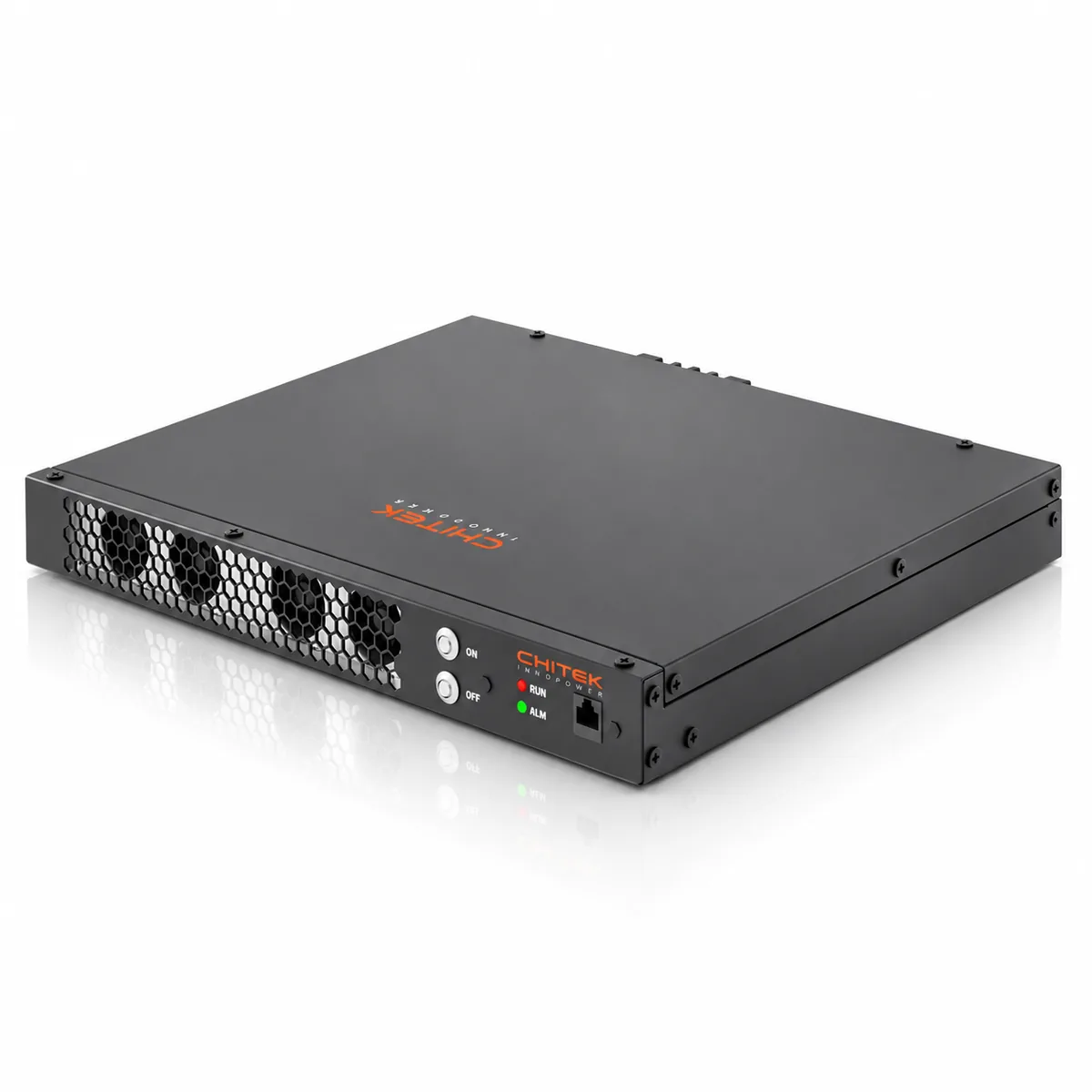
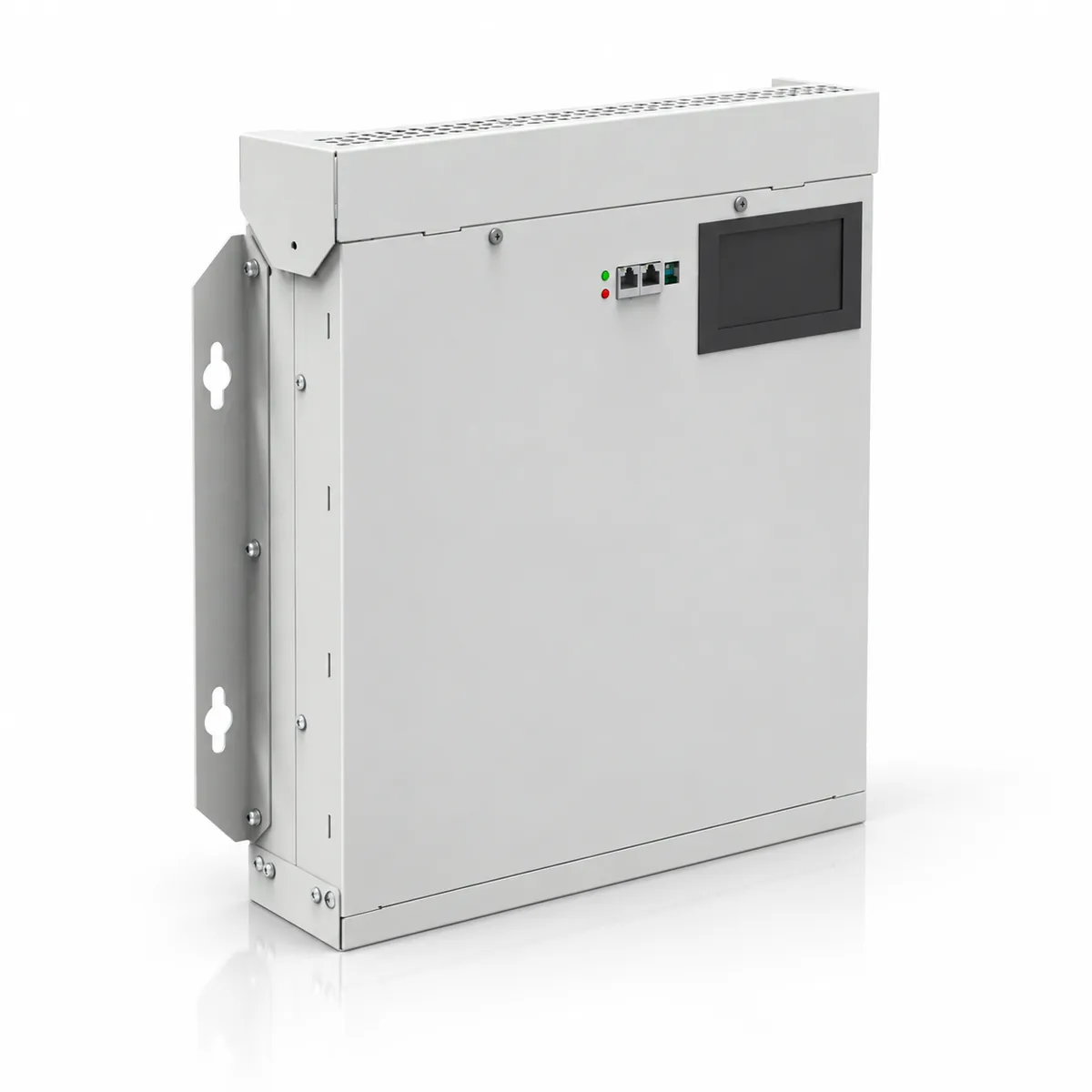
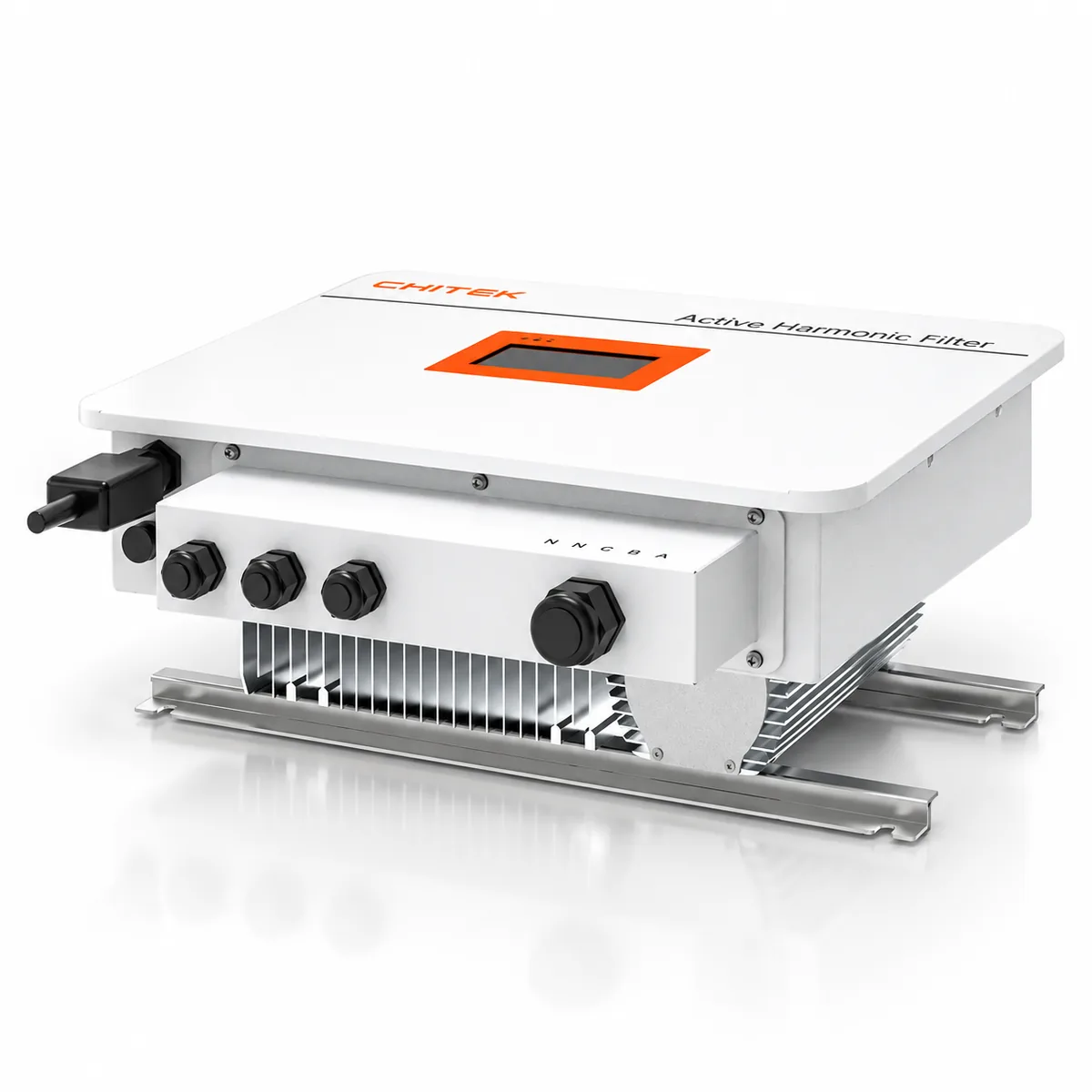
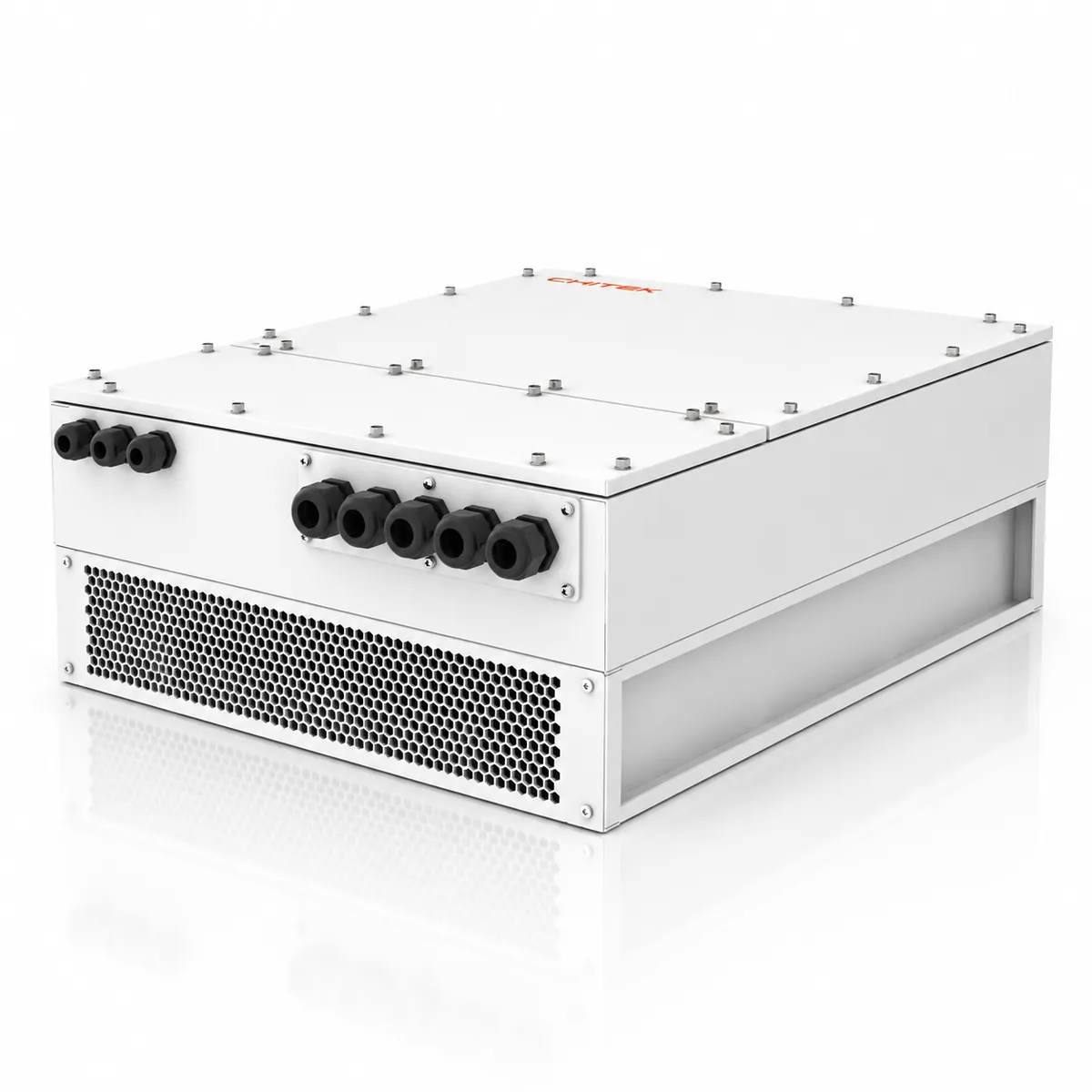
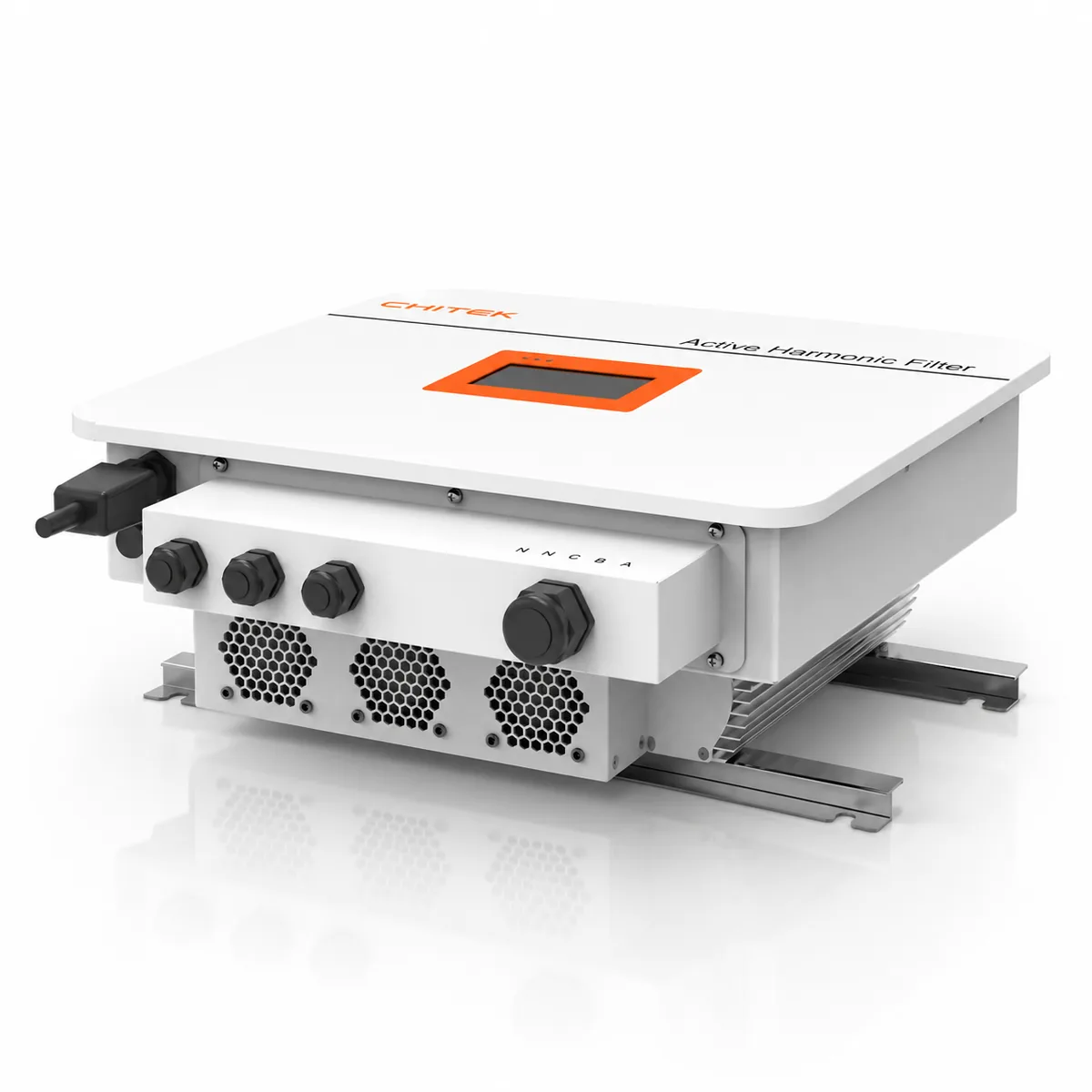
Advanced Static Var Generator (ASVG) Series
Every CHITEK Advanced Static Var Generator (ASVG) reads the network’s reactive demand cycle by cycle and injects or absorbs exactly what it needs — continuously, not in switched capacitor steps. Power factor holds at whatever target you set, and the voltage stops sagging every time a big load comes on.
ASVG is the step up from the standard SVG platform: the same stepless correction, specified for sites where the swings are sharp enough that coarse compensation arrives too late to matter. Reactive demand never sits still — motors start, drives ramp, welders pulse — and the generator follows it as it moves instead of chasing it in steps.
Benefits of Advanced Static Var Generator (ASVG)
- Lower reactive-power charges and avoid power-factor penalties
- Free up capacity in the transformers and cables you already own
- Voltage holds steady even when the swings are sharp
- Payback on your investment, faster on penalty-heavy sites
- Motors, transformers and switchgear last longer under sharp swings
- Stepless correction at the speed the load actually moves
Application of Advanced Static Var Generator (ASVG)
Industry
Automotive, metal processing, plastics and extrusion, pulp & paper, food & beverages
Commercial buildings
Data centers, hospitals, airports, logistics centers, shopping malls
Infrastructure and utilities
Pumping stations, water treatment, irrigation systems, desalination
Anyone with fast-changing loads
Wherever motors, welders, rolling mills or press lines run, the unit follows the swing instead of chasing it
Working Principle of Advanced Static Var Generator (ASVG)
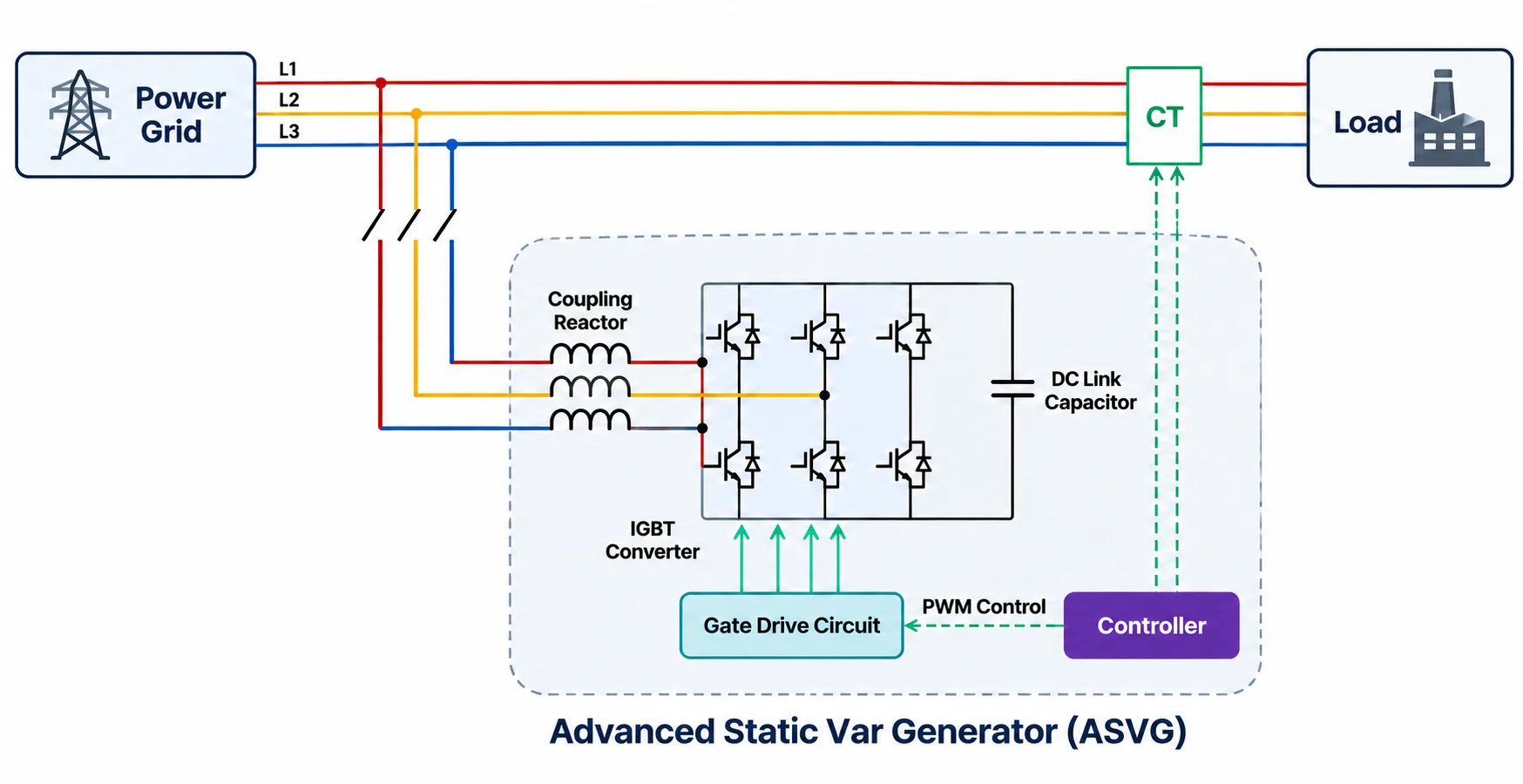
Inside every CHITEK ASVG, the CTs keep sampling the load current while the DSP at the core runs the control algorithm. It splits the reactive component out of the active current, tracks how fast the demand is moving, and calculates the leading or lagging current the network needs right now — which is what separates it from compensation that only arrives after the fact.
The DSP then drives the IGBT bridge through PWM. The inverter injects a compensation current in quadrature with the voltage, so reactive demand is answered at the point of use. The CTs read the output current back into the DSP as negative feedback, and that closed loop is what keeps the output continuous: no contactor steps, no overshoot and no resonance with the network.
FAQs About the Advanced Static Var Generator (ASVG) Series
Q1: How does an ASVG differ from a capacitor bank?
A capacitor bank switches in fixed steps, so its correction arrives after the load has already moved and it can resonate with the network. An ASVG reads the reactive demand continuously and injects exactly what is needed at that moment — specified for sites where the swings are sharp enough that coarse compensation arrives too late.
Q2: Can one ASVG follow a load that changes between shifts and within seconds?
Yes. Welding, motor starts, press lines and drive ramps change the reactive demand many times a second, and the unit tracks those changes cycle by cycle rather than in contactor steps. The same closed loop covers both the slow daily pattern and the fast swings.
Q3: Can ASVG units be combined for a higher capacity?
Yes. The range is modular — units parallel to cover a single wall-mounted module or a large plant rather than forcing everything through one oversized cabinet.
Q4: Can ASVG be installed outdoors or in harsh environments?
Yes. Besides indoor enclosures, the range includes IP65 models for outdoor and dusty sites, plus anti-pollution and fanless low-noise versions where dust, corrosion or acoustic noise is the constraint.